
Coverage and development notes that lead to clearer next steps.
Story Notes evaluate structure, character, pacing, dialogue, and adaptation potential, then turn that analysis into outputs writers and executives can actually use.
Traditional coverage leaves teams guessing.
Traditional Coverage
- Generic pass / consider / recommend.
- Surface-level summaries.
- Notes that describe problems without solutions.
- Weeks of turnaround.
Story Notes
- Structural analysis tied to specific pages.
- Actionable next steps for the writer.
- Compare multiple approaches side by side.
- Minutes, not weeks.
From source coverage to rewrite direction.
Review Pass
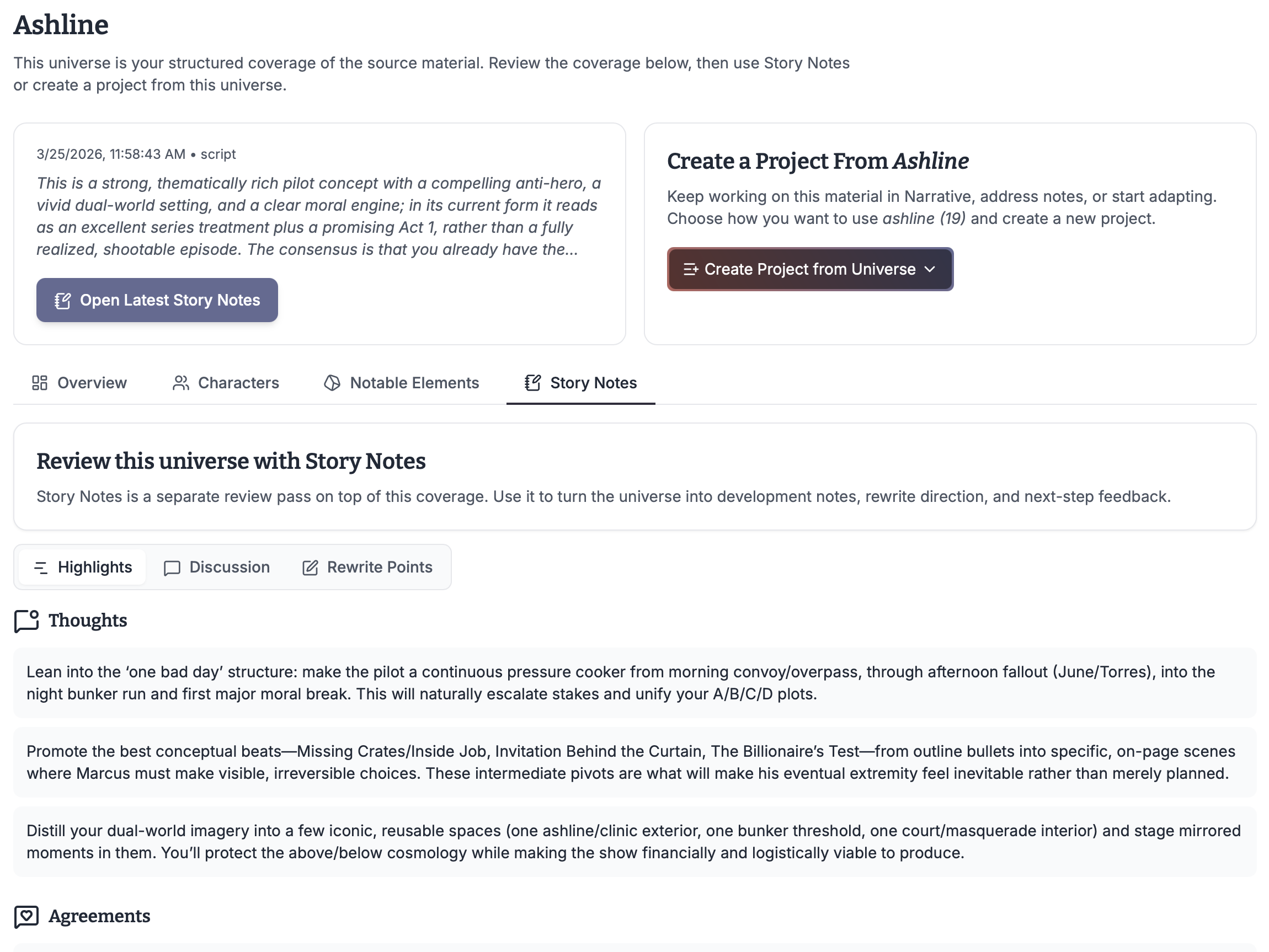
Start from structured coverage, then open Story Notes on top of it.
Story Notes sits on top of the source-material coverage and turns that analysis into a working notes layer with highlights, discussion, and rewrite points tied to the material.
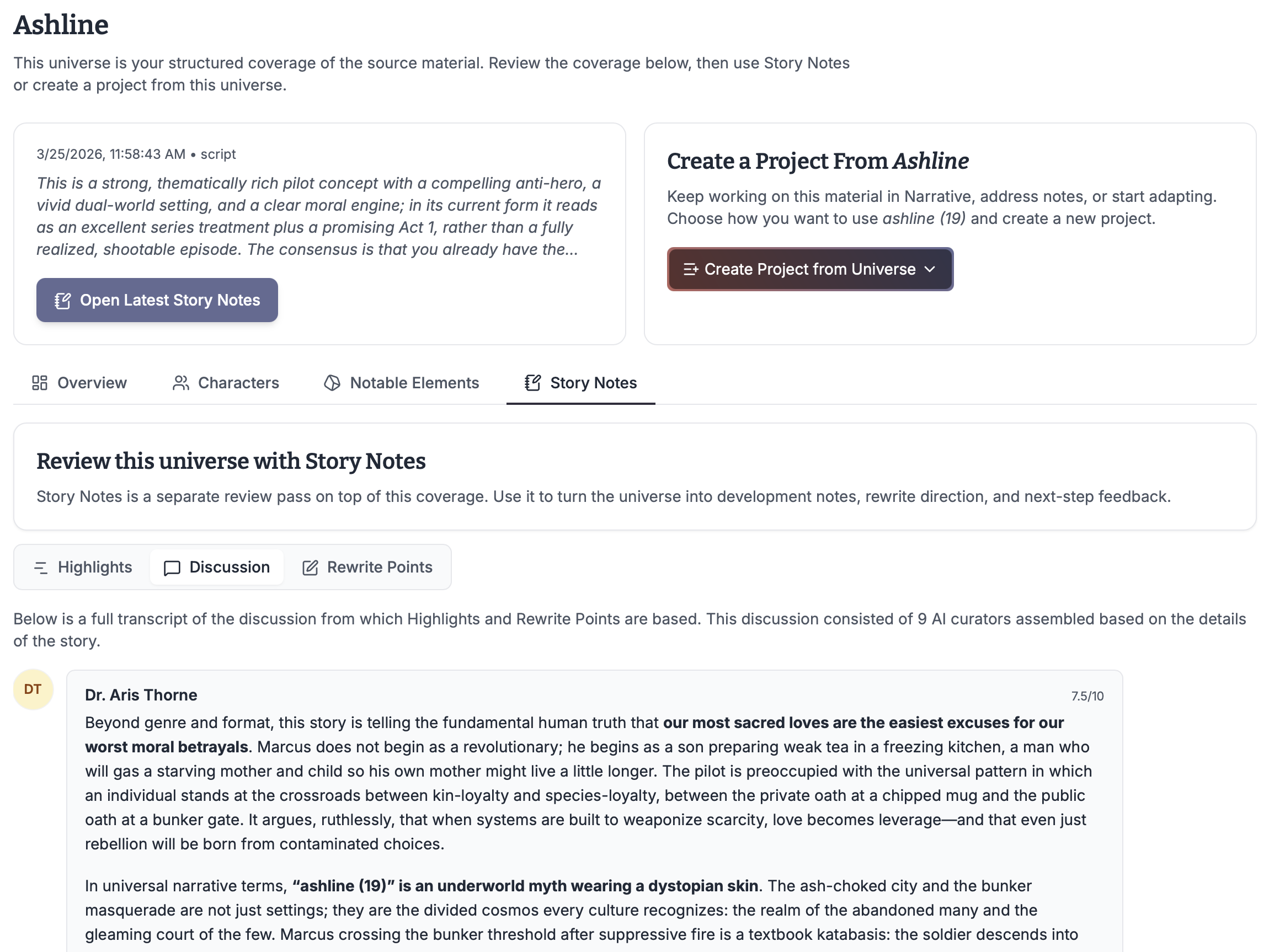
Discussion
See the reasoning behind the notes, not just the notes themselves.
The review includes the panel discussion that produced the notes, so development teams and writers can understand why a note surfaced and where the consensus is coming from.
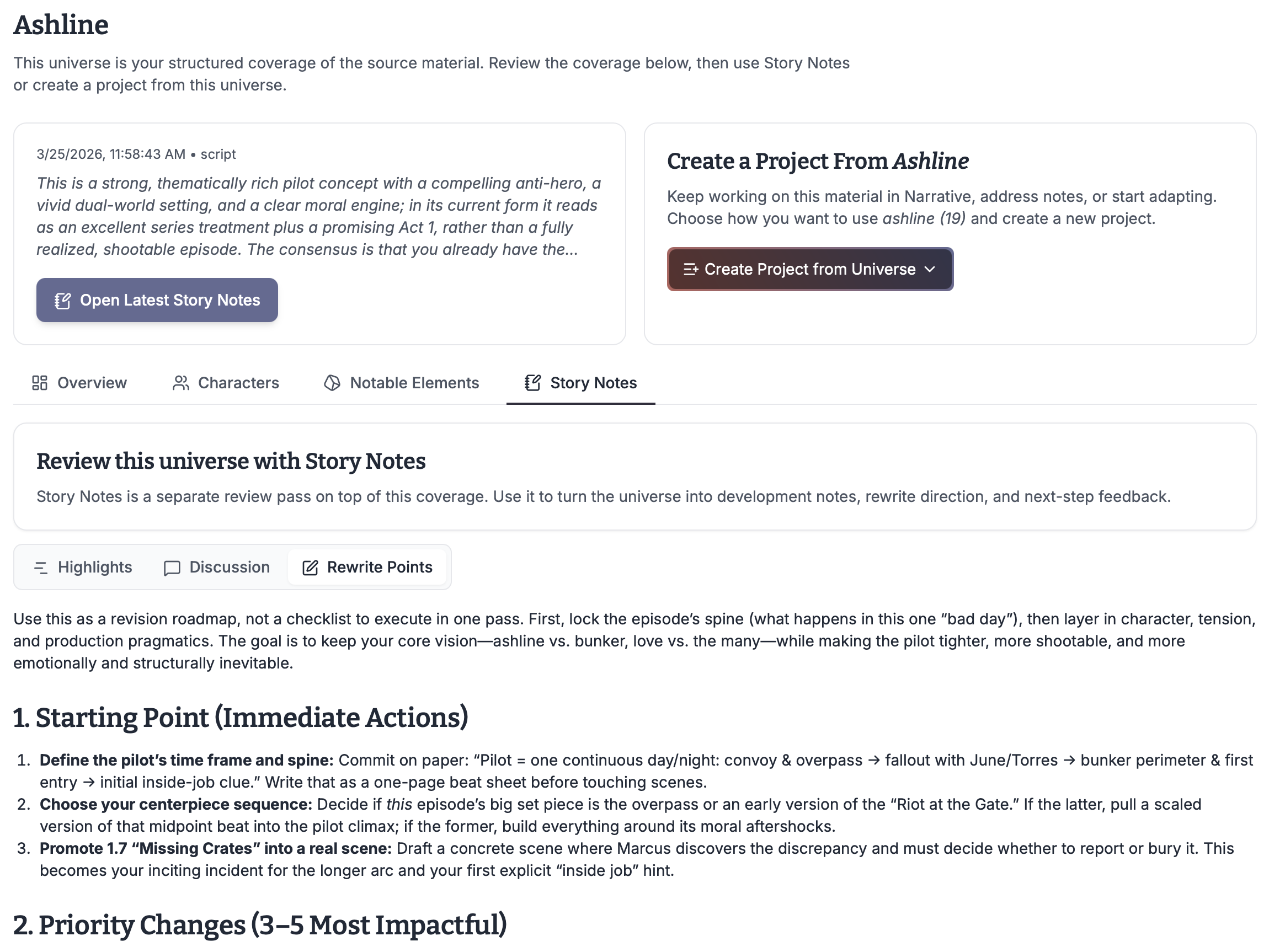
Rewrite Points
Move from diagnosis into a practical rewrite roadmap.
Story Notes organizes the next pass into immediate actions and highest-impact changes, so the writer has clear direction instead of a vague stack of coverage comments.
Built for both sides of the table.
Development Teams
Generate notes for every submission. Compare drafts across rounds. Give writers actionable direction instead of vague feedback.
- Cover more material in less time
- Align internal notes before they go to the writer
- See what improved or drifted between drafts
- Make packaging decisions with better information
Writers
Get structural feedback on your own work. Identify blind spots before sending to producers. Iterate with precision.
- Know what works before you send it out
- Get page-specific notes, not vague impressions
- Compare your drafts to track real progress
- Arrive at meetings with clearer answers
Your scripts and IP remain yours. We do not train on your work.
See Story Notes on your own material.
We run pilots with development teams and selected creator workflows. Tell us about your material, team, or use case.